
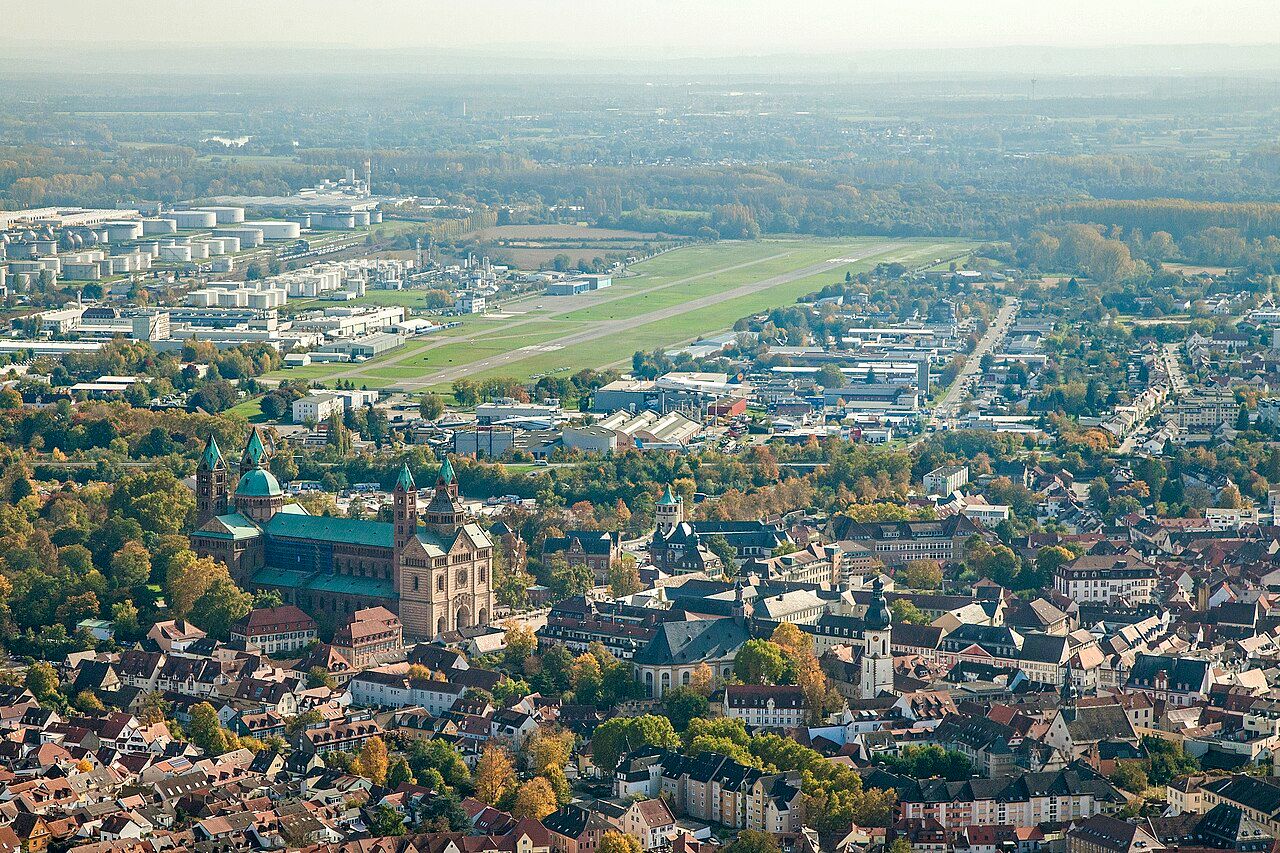
The third dimension is deceptive
On the ground we judge distances on a flat surface. In the air, height comes into play, and that changes everything: from the garden, an aircraft a few hundred metres up often looks as if it is flying right over your roof, even though it is some way off to the side. The higher the aircraft, the harder this is to judge from below.
On top of that, aircraft take off and land into the wind and along the runway. Our runway is aligned 16/34, roughly north to south. Approaches and departures therefore always follow the same line, and the traffic circuit is fixed as well. Simply flying an aircraft “somewhere else” is hardly possible.
How we manage flight operations
We set standards and procedures: the traffic circuit, the noise abatement times and the areas pilots should not overfly, such as the cathedral, the town centre, the swimming pool and the surrounding villages.
In the air, pilots are responsible for themselves. They decide in the cockpit how to fly their aircraft safely, as aviation law provides.
Why deviations are sometimes necessary
Wind, weather, other traffic or safety on board can make it urgently necessary to leave the usual path. An aircraft simply cannot pull over. In such moments safety comes first, for the people on board and for those on the ground.
What we can do and what we cannot
We see ourselves as mediators between aviation and the neighbourhood. We do not have enforcement powers like an authority.
What we do: we speak to pilots who stand out and work towards flying that is considerate of the community. The more precisely you describe a flight to us, with time, place and if possible the registration, the more specifically we can do this.
Our neighbourhood matters to us
We have been here since 1912, and moving is not an option. That is why we work for good neighbourly relations. If a flight bothers you, tell us.